
The Deborah Gray Scholars Program
Developing the Next Generation of
Human & Civil Rights Leaders
The Deborah Gray Scholars Program is created to honor the life and career contributions of Deborah Gray, while assisting in developing the next generation of women and men committed to human and civil rights. Ms. Gray, the long-time Managing Director of the Tuskegee History Center, was a serious student, committed to the academic process. Her career exemplified high-level thinking devoted to the public, from curating a museum to effectively communicating the stories of the struggle for human and civil rights. Her passion for civil rights and the Tuskegee History center was matched by her desire to encourage students in the pursuit of social justice. She dedicated her life to revealing the stories of those who may have been forgotten and the rich legacies of Americans who helped build this country’s social conscious, especially in Tuskegee and Macon County, Alabama.
Program Overview
- Timeline
- Applications: April 1 – May 31, 2026
- Selection Process: June 1 – June 30, 2026
- Chosen Scholars Notified: First Week of July, 2026
- Program: September 2026 – March 2027 Symposium
- Structure
- Two-day civil rights pilgrimage to Montgomery, Selma & Tuskegee
- Six virtual mentorship and project-development sessions
- In-person Colloquium at the Spring 2027 Symposium
- Expectations
- Full participation in all meetings
- Commitment to academic excellence, civic engagement, and social justice
What Scholars Gain
- Scholarly Development
- Mentorship from civil rights leaders, scholars, and advocates
- Presentation of original work at the 2027 Colloquium
- Leadership & Advocacy Skills
- Collaboration on a civil rights project
- Training in public communication and community engagement
- Civic Participation
- Preparation for voter outreach, advocacy work, and democratic engagement
- Long-Term Impact
- Development of ideas that strengthen voting access and democratic institutions
- Public recognition and advancement into the Senior Cohort
2026 Inaugural Cohort of Deborah Gray Scholars


Daniya Tennant
University of Pennsylvania, 2028
Law and Society & African American Studies


Timetable
Please review the list of important dates below.
Application Process Opens
April 1, 2026 – May 31, 2026
Review & Selection Process
June 1, 2026 – June 30, 2026
Chosen Scholars Receive Notification
First Week of July, 2026
Program Begins
Mid-September 2026
and ends at the March 2027 Symposium
Scholar Expectations
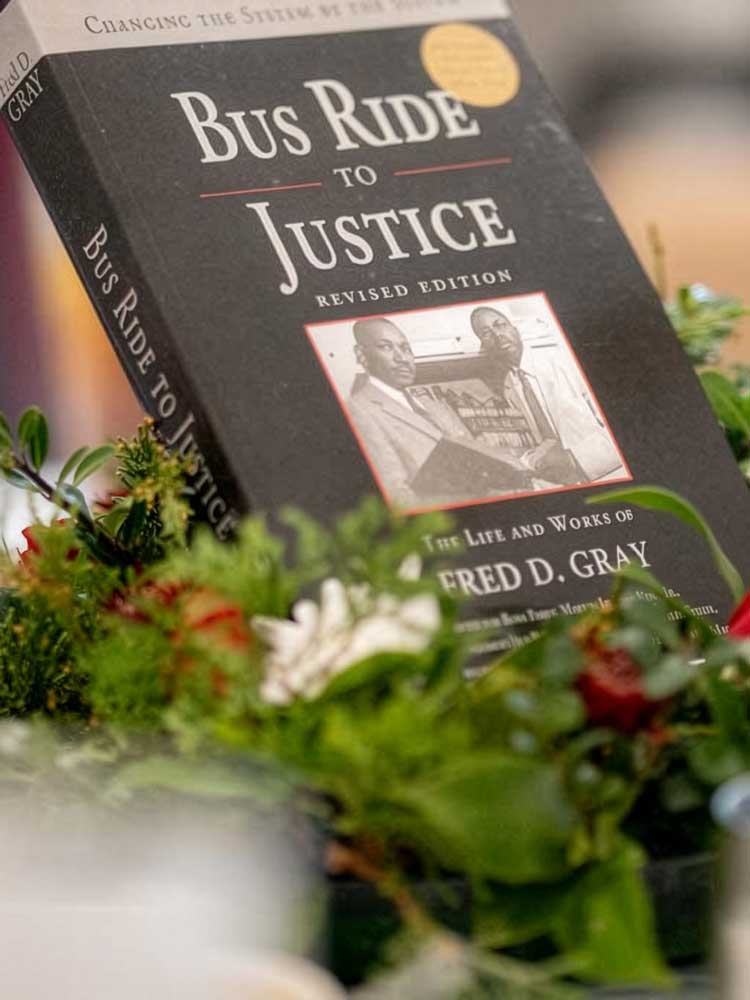
- The Scholars must demonstrate their commitment to academic excellence, civic engagement, social justice, and personal integrity as they become knowledgeable of the principles of Attorney Fred Gray’s legal legacy.
- Full engagement in all 8 meetings, including preparation for and participation in the 2027 Colloquium.
Criteria
Excelling as a Deborah Gray Scholar in Civil Rights, with a focus on voting rights, requires a combination of academic skills, civic engagement, and personal commitment to social justice. Successful applicants will reveal their qualifications through a 6-page essay, “Reflection from Life Experiences,” engaging the criteria outlined below.
Applicants are encouraged to submit a 60-90 second “addendum;” a video performance in poetry, music, dance, or painting, etc., to express why voting rights are important for a social justice movement for this generation.
The Deborah Gray Scholars Program
Application Process
Scholars must demonstrate their commitment to academic excellence, civic engagement, social justice, and personal integrity as they become knowledgeable of the principles of Attorney Fred Gray’s legal legacy.
Mentorship Team

Cassandra Adams • Tafeni English-Relf •
David Fleer • Fred Gray, Jr. • Cal Walker
2026-27 Cohort Focus:
Voting Rights
Eligibility:
Undergraduate Students
What Scholars Will Gain
Scholarly and Professional Development
The Scholars will have exposure to the mentoring team, leading thinkers, and activists in human and civil rights, and graduate school faculty in civil rights law, social justice, or political advocacy.
At the March 2027 Symposium, Scholars will present their work in one or two panels as the featured activity of the Deborah Gray Scholars’ Colloquium.
Leadership and Collaboration
Scholars will develop Civil Rights teamwork skills in their collaborative community project, prepare for public communication by learning to speak persuasively about voting rights issues in public forums or academic settings, and be prepared for leadership roles in organizing educational workshops, voter registration drives, or awareness events.
Commitment to Civic Engagement
Preparation for active participation in advocacy groups, voter outreach initiatives, or student organizations that promote political participation and work with nonprofits, legal organizations, or government agencies focused on electoral rights.
Community awareness: Understanding local and national issues affecting voter access and participation.
Long-Term Vision and Impact
The program will be part of a long-term commitment to democratic participation and equality to develop ideas or solutions that improve access to voting or strengthen democratic institutions.
Acknowledgement
Scholars will receive public, written and personal acknowledgements for their work.
Senior level Cohort
Scholars will move into the Senior level Cohort and provide support and guidance to the next cohort.
Deborah Gray Scholars Program Sponsor
We express thanks to NBA President Ashley Upkins, Esq.
whose vision for our future and leadership in raising scholarship support
have allowed the Fred Gray Institute for Human and Civil Rights
to launch the pilot “Deborah Gray Scholars Program” for undergraduate students.

Questions?
If you have questions, we’d be glad to answer them! Please email us at info@fredgrayinstitute.org and we’ll be in touch shortly.